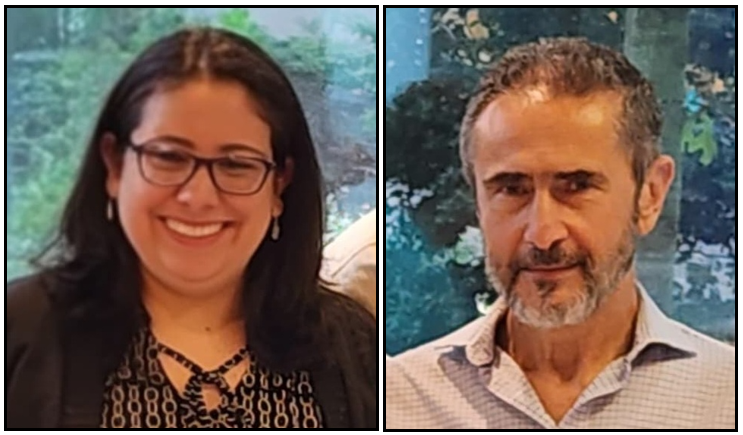
B-HIVE Highlight on Mentorship: Greg Melikian and Dariana Torres-Rivera
Behind most of the exciting results that B-HIVE groups publish is a trainee working their way towards becoming an independent researcher. This special highlight on mentorship focuses on B-HIVE investigator Gregory Melikian, who leads a virus-entry laboratory in the Department of Pediatrics at Emory University, and Dariana Torres-Rivera, who spent nearly seven years in his lab and recently completed her PhD.
The Melikian lab has long been interested in how enveloped viruses enter cells, beginning with influenza and, in the mid-1990s, extending his research to HIV-1. The lab dissects the molecular mechanisms of viral entry and its restriction by host factors such as IFITMs and SERINC5, working across HIV-1, influenza, arenaviruses, and SARS-CoV-2, using virus-labeling and visualization techniques in living cells, super-resolution and single-molecule imaging, and correlative light and cryo-electron microscopy. Dariana arrived at Emory with an undergraduate background in biology and a taste for infectious-disease research; she joined the lab to work primarily on HIV-1.
Studying HIV nuclear entry and restriction
Dariana had two major B-HIVE projects that focused on different aspects of HIV infection. In her recently published first-author study, she used super-resolution Stochastic Optical Reconstruction Microscopy (STORM) of human cells to study whether the nuclear pore changes size when the cell experiences stressors, which are expected to modulate nuclear import of HIV-1 cores. A second project focused on using live-cell and super resolution microscopy to study HIV-1 restriction by MX2. In an earlier project, Dariana also helped develop and validate a deep-learning approach that predicts the contour of the nuclear envelope directly from transmitted-light images.
Getting unstuck
Dariana says that she experienced numerous hurdles during her graduate school career. What carried her through, she says, was talking about the science and difficulties with other people who may have encountered similar issues. Through B-HIVE meetings and conferences she was able to connect with experts in the field, including a collaboration with Michael Malim’s group at King’s College London. The professional development workshops and conferences she took part in during graduate school, she notes, were among the experiences that most enriched her training.
Next steps
Having wrapped up her Ph.D. training, Dariana is now looking toward a career in industry that balances hands-on research with science communication, an interest she wants to carry into public conversations about infectious diseases and vaccines. She has worked with Ciencia Puerto Rico (cienciapr.org), an organization that connects STEM specialists with students and the public, including mentoring an elementary-school student through a science project of their own.
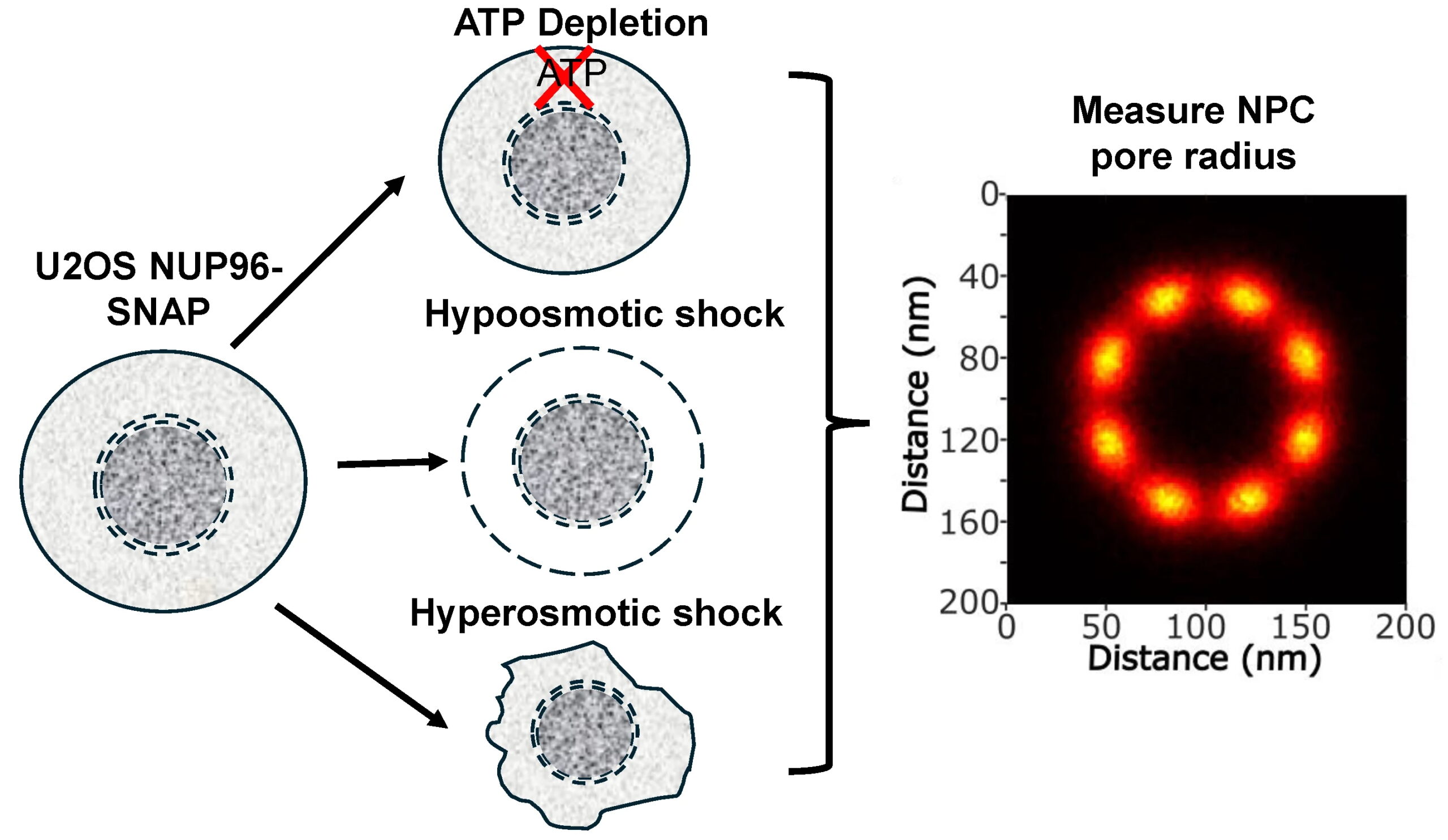
Averaged super-resolution (STORM) reconstruction of the human nuclear pore complex, resolved from single-molecule localizations of NUP96-SNAP, showing the eight-fold symmetric ring that was measured across ATP-depletion and osmotic-stress conditions.
Meet the Researchers
How did you become interested in studying HIV?
Greg: I’ve studied entry of influenza and other enveloped viruses since 1985. In the mid-1990s, I realized that functional dissection of the viral fusion process could be moved to an entirely new level by taking advantage of the reagents and resources available for HIV research. In hindsight, this was the right decision.
Dariana: As an undergraduate I did summer internships in microbiology, working with bacteria, and I liked the field. That experience made me want to work on infectious diseases. When I got to Emory and was looking for labs, I met Greg during a virology and microscopy course, and I joined his lab because of the research—mainly working on HIV-1.
Tell us about the research you did in the lab.
Dariana: I had two main projects. The first was trying to understand how the nuclear pore complex behaves dynamically to allow the HIV-1 core to enter the nucleus. I used super-resolution STORM imaging of capsids and pores under different stress conditions to see whether they changed the dynamics of the NPCs. Unfortunately, we didn’t see the pore size change under these conditions. Although the results were negative, I really enjoyed doing those experiments and learned a lot. The second project was studying how MX2 restricts HIV-1, using microscopy to ask how MX2 interacts with the capsid in live cells, how long it takes to restrict, where in the cell it happens, and how it works—including whether we could see the destabilization of the capsid core by MX2. This project was very complicated.
What most enriched your experience in graduate school?
Dariana: Participating in workshops for professional development, and conferences like B-HIVE that connected me to people who were experts in the field. One of those connections became a collaboration with Michael Malim’s group in London, who are very recognized for their work on MX2.
What did Greg teach you that wasn’t just about the science?
Dariana: I learned a lot about communication. English is my second language, and I’d never had to explain complex science to other scientists before—Greg taught me how to communicate to researchers, both spoken and written. He also taught me how to critically analyze data in detail: how to design experiments, how to understand results, and to pay attention to every detail, because every detail counts and means something. I’m planning to continue in biomedical research in industry, and that will be useful in the future.
Can you describe a time you were stuck, and how you got unstuck?
Dariana: The MX2 project was very challenging because it was hard to find a tag that would let me image the protein without affecting its function. I eventually found a tag that labeled well and worked reasonably, though it still needs refining. Along the way I tried a lot of different tags and also tried experiments that didn’t require direct tagging. I just kept trying different things and talking to other people, since you might find someone who has encountered the same problem and figured out a solution. I did get some good advice this way!
Do you have an anecdote about mentoring Dariana? How did she surprise you?
Greg: Dariana was initially very quiet and low-key, but she grew immensely during the nearly seven years she was in my lab and surprised me on several occasions. For instance, she took the initiative to start a collaboration with a computational lab to average her noisy super-resolution images of nuclear pores, which really helped us interpret the results. She later took it upon herself to learn all the computational techniques and software and analyzed most of the experimental data on her own.
What do you think are the biggest challenges in training graduate students, and what keeps them engaged?
Greg: The main challenge is motivating students and keeping them engaged. My approach is to have weekly, or more frequent, one-on-one meetings, encouraging critical presentation of the relevant literature, and participation in local and international conferences. I try to teach them how to think independently and ask the right questions.